
Protect Them by Preparing Them
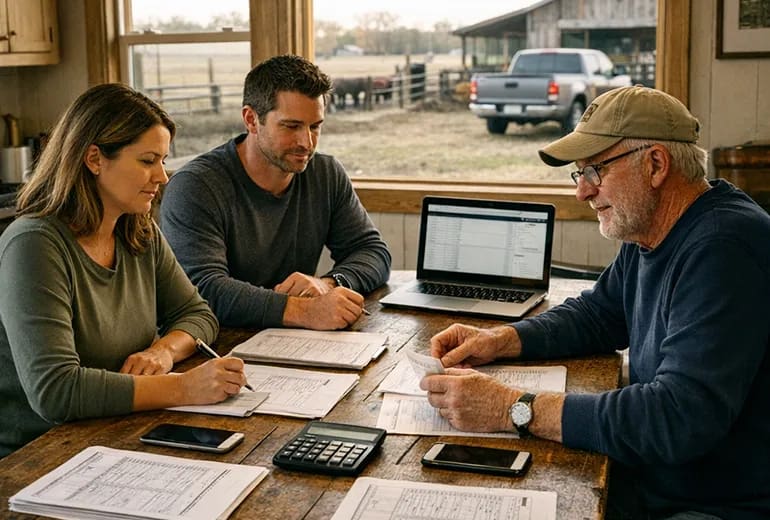
Shielding heirs from risk weakens succession. Instead, prepare next generations through financial transparency, shared decision-making, adviser relationships and early role clarity, building resilience, confidence and steadiness amid volatility cycles.
If you’ve been in the cattle business long enough, you’ve lived through more than one cycle that made you question your sanity. You’ve seen high interest rates, relentless drought, feed costs spike overnight and markets turn just when you thought you were positioned well. You’ve signed operating notes that tightened your stomach and watched equity swing based on forces outside your control.
So when you think about your kids or grandkids stepping into this business, it’s natural to want to shield them for as long as you can.
That instinct is honorable. But many succession conversations stall right there. The transitioning generation delays planning because they want to protect the next generation from volatility, debt, stress and hard years. They remember how heavy the responsibility felt and don’t want to hand that burden to someone they love.
But here’s the reality: Sheltering them doesn’t protect them. Preparing them does.
The reality
Cattle producers don’t operate in stable environments. Prices move quickly. Weather shifts. Policy changes. Interest rates rise. Land values climb faster than cash flow. If you’ve built a successful operation, you did it by learning to navigate uncertainty – not by avoiding it.
The next generation won’t be spared volatility. In many ways, they may face even greater complexity: larger balance sheets, tighter margins, regulatory pressure and faster-moving markets. Avoiding succession planning doesn’t remove those realities. It only delays their exposure until the stakes are even higher.
The question isn’t whether they will face risk. The question is whether they will be prepared when they do.
Some of the most important decisions in agriculture happen when none of the options look good. You’ve likely faced choices like selling cows during drought or borrowing more to feed through. You may have locked in prices that barely covered cost of production just to manage risk. You may have debated expanding during a strong market or conserving capital in case the cycle turned.
These aren’t textbook decisions. They are judgment calls made with incomplete information and real consequences.
Preparing for the hard years
If the next generation has only seen the good years – or if they’ve been shielded from the hard conversations – they won’t have the context to make those decisions. When pressure hits, they may freeze or react emotionally rather than strategically.
Preparing them means letting them sit at the table when the options are unattractive. It means walking them through why you chose what you chose – and admitting when hindsight would have changed your approach. You’re not protecting them by hiding the stress. You’re protecting them by teaching them how to think clearly under pressure.
One of the biggest gaps in succession is financial understanding. The senior generation often carries the entire financial picture in their head. They know cost of production per cow, how debt is structured, what collateral is pledged and how much family living the operation must support.
The next generation may be excellent cattlemen or cattlewomen. They may understand pasture management, herd health and equipment. But if they don’t understand the numbers, they’re stepping into the future half-prepared.
When responsibility eventually shifts, the numbers won’t get simpler.
Involving them early in balance sheet reviews, income statements, cash flow projections and lender discussions builds confidence and clarity. When they understand margins and financial position, volatility becomes something to manage rather than something to fear. Financial knowledge doesn’t eliminate stress, but it replaces uncertainty with informed decision-making.
Beyond finances, every established producer has built professional relationships over decades – lenders, accountants, attorneys, nutritionists, animal health advisers, insurance agents, marketing partners. These relationships were built on trust and shared experience.
When succession planning is delayed, the next generation often inherits the business without inheriting the depth of those relationships. They walk into meetings where everyone knows their parents but doesn’t yet know them as decision-makers.
Preparation means gradually transitioning those connections. Bring them to annual reviews. Let them lead part of the discussion. Position them as capable partners rather than observers. When advisers see them as engaged and competent before transition occurs, growth becomes possible. They aren’t forced to assemble a support system in the middle of crisis.
You protect them by surrounding them with trusted advisers before they urgently need them.
Building a network
Equally important is a network of fellow producers. No one thrives in this business in isolation. Strong operators learn constantly – through peer groups, associations, marketing alliances and informal conversations.
Younger producers sometimes hesitate to step into those circles, especially if they feel they haven’t earned their place. Encouraging them to engage broadens their perspective. They see different grazing systems, alternative marketing strategies and innovative approaches to labor and capital. They learn best practices and avoidable pitfalls.
Most importantly, they realize they are not alone in difficult years. A strong network becomes a sounding board before major decisions are made. It provides perspective when pressure mounts.
Family dynamics add another layer of complexity. Succession in agriculture is never just financial. Siblings may have different levels of involvement. Off-farm heirs may have expectations. Spouses may carry unspoken concerns. Roles can blur, and authority can be assumed rather than clarified.
When succession planning is postponed, these dynamics don’t resolve themselves. They intensify.
Often the senior generation avoids these conversations to prevent conflict, hoping time will sort things out. Unfortunately, unresolved tension often resurfaces at the worst possible moment – during illness, death or financial stress.
Preparing the next generation includes clarifying roles, distinguishing ownership from management and establishing healthy communication patterns long before crisis forces the issue. Families who practice these conversations early build resilience. They learn to disagree constructively and separate business decisions from personal relationships.
Teaching the next generation how to navigate family dynamics may be one of the most protective steps you take.
There is also a personal side to succession. For many producers, the operation is more than a business – it’s your life’s work. Your name is tied to the land, the herd and the reputation you’ve built. Stepping back can feel risky, financially and emotionally.
Preparation doesn’t mean disappearing. It means evolving.
Your role shifts from sole decision-maker to mentor, strategic thinker and coach. Your experience still matters. Your wisdom is still needed. But you begin sharing responsibility in a way that strengthens the future rather than jeopardizes it.
If you truly want to protect the next generation, protect them from ignorance – not information. Protect them from isolation – not responsibility. Protect them from sudden shock – not gradual exposure.
The cattle business has never been easy, and it likely never will be. It rewards resilience, discipline, sound judgment and strong relationships.
When you bring the next generation into the numbers, the meetings, the difficult decisions and the family discussions, you aren’t burdening them. You’re equipping them.
And when the next drought hits, markets swing or interest rates climb, they won’t be blindsided. They’ll be steady, thoughtful and capable.
That is real protection.
You don’t safeguard the future of your operation by shielding it from reality. You safeguard it by preparing the people who will carry it forward.

Article by Rena Striegel, President of Transition Point Business Advisors
Transition Point Business Advisors as has a program entitled, The DIRTT Project, which gives the American Farmer full control of their succession plan from beginning to end. Go to our website to learn more about The DIRTT Project.